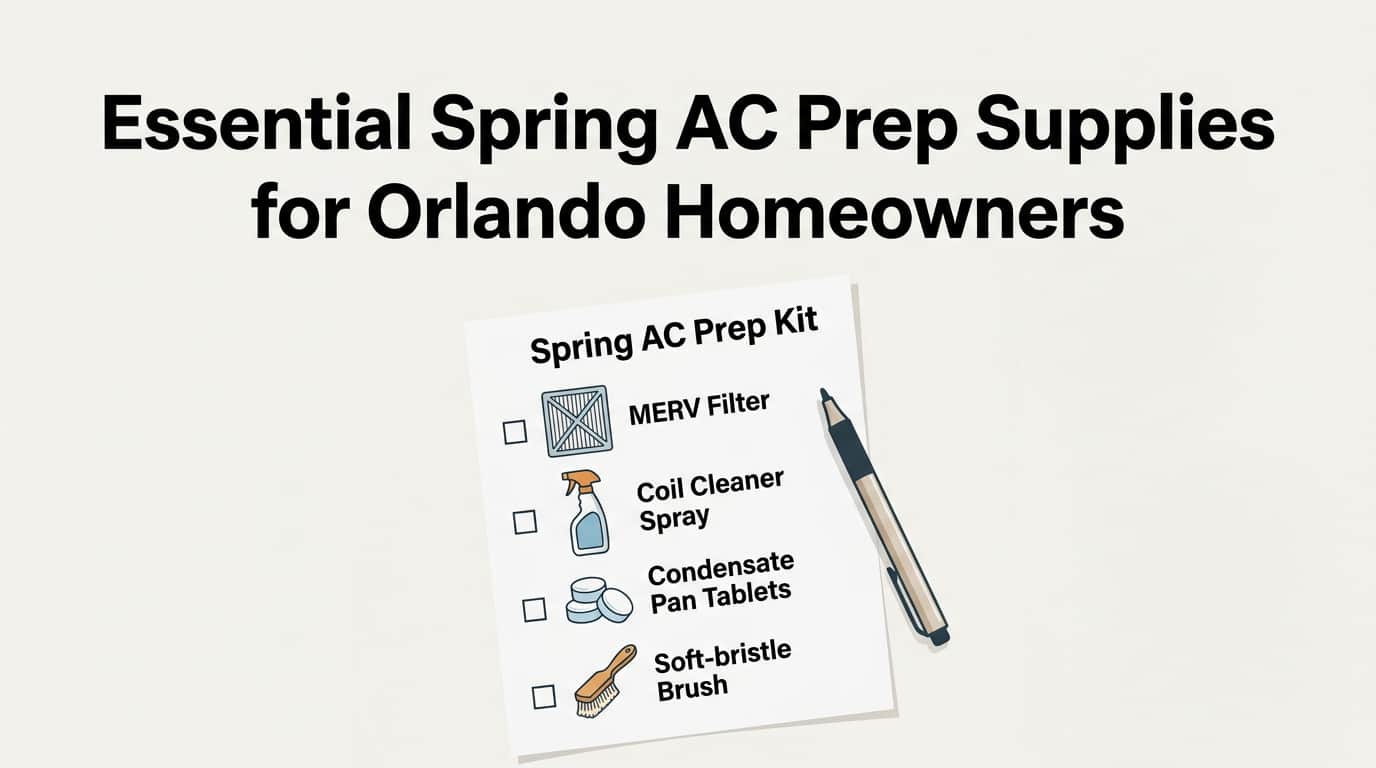
Spring arrives fast in Orlando. By March, temperatures are already climbing past 80°F, and Central Florida's notorious humidity is right behind them. Getting your AC ready now, before the summer heat peaks, can save you hundreds of dollars in repair bills and keep your system running at full efficiency when you need it most.
Need help sourcing the right supplies? Discount Air Supply LLC carries everything on this list. Call them at (407) 951-5050, and they'll get you sorted.
Why Does Pre-Spring AC Maintenance Matter More in Florida?
Orlando's climate puts more strain on air conditioning systems than almost anywhere else in the country. Most homes run their AC eight to ten months out of the year, compared to four or five months in northern states. That constant use wears down components faster, clogs filters more quickly, and makes the evaporator coil and drain line far more vulnerable to buildup.
Homes in neighborhoods like Dr. Phillips and Lake Nona, where newer construction means tightly sealed homes, see this effect amplified. Less natural air exchange means your system processes more recirculated air, which accelerates filter clogging and puts added load on the blower motor. A few dollars spent on the right AC supplies in Orlando before May can prevent a $400-$1,200 repair call in July.
What Filter MERV Rating Should Orlando Homeowners Use?
For most Central Florida homes, a MERV 8 to MERV 11 filter strikes the right balance between air quality and airflow. MERV 8 filters cost $5-$12 each and catch dust, pollen, and mold spores at a rate that keeps indoor air healthy without restricting airflow through the system. MERV 11 filters offer better filtration for homes with pets or allergy sufferers but should only be used if your system's blower can handle the added resistance.
What most homeowners don't realize is that Florida's humidity dramatically accelerates how quickly filters load up with particulate. Replace your filter every 30-45 days during the summer months from April through September. During the milder winter season, every 60-90 days is fine for most households. A clogged filter forces your blower to work harder, which raises your electricity bill and stresses the motor.
For homes serviced by central air conditioning systems, the right filter size matters just as much as the MERV rating. Check the filter slot dimensions before you buy.
The Right Coil Cleaner Makes a Real Difference
Your evaporator coil sits inside the air handler and pulls heat from the air passing over it. Orlando's humidity means mold and mildew can build up on that coil within a single season. A dirty coil reduces cooling efficiency by 15-25%, which translates directly into higher electric bills and a system that struggles to hit your set temperature on the hottest days.
Use a no-rinse foaming coil cleaner, applied while the system is off. The foam lifts biological buildup from the coil fins and drains away through the condensate line. One can of coil cleaner costs roughly $8-$15 and takes about 20 minutes to apply. Our technicians typically find the most severe coil buildup in homes that haven't had a cleaning in two or more seasons.
For the outdoor condenser unit, a fin-safe condenser coil cleaner works well. Spray it on, let it sit for five minutes, then rinse with a garden hose from the inside out. This removes the grass clippings, cottonwood fluff, and general outdoor debris that accumulates over the fall and winter.
How Do You Keep the Condensate Drain Line Clear?
Pour 1/4 cup of distilled white vinegar into the condensate drain line access port once per month during the cooling season. That's the short answer, and it works.
Here's why this step matters so much in Florida: the drain line removes the moisture your system pulls from the air during the dehumidification process. Orlando averages 70-80% relative humidity in the summer, which means your system pulls several gallons of water per day from the air. That moisture creates the perfect environment for algae and slime to grow inside the drain line. A blocked drain line triggers the float switch, shuts your system down, and often causes water damage to ceilings or air handler cabinets before the homeowner notices.
Dedicated condensate line treatment tablets cost $10-$20 for a three-month supply and are more effective than vinegar alone. Drop one in the drain pan access after each filter change and the treatment dissolves slowly over 30 days.
A Step-by-Step Spring Prep Guide for DIY Homeowners
Follow these steps in order before your first hot week of the season:
Step 1: Turn off the power at the disconnect and thermostat. Never clean or inspect any component while the system is live.
Step 2: Replace the air filter. Check the size printed on the old filter's cardboard frame, buy the correct MERV 8 or MERV 11 replacement, and install it with the airflow arrows pointing toward the air handler.
Step 3: Clean the evaporator coil. Apply no-rinse foaming coil cleaner to the evaporator coil inside the air handler. Let it sit for 10-15 minutes.
Step 4: Treat the condensate drain. Pour diluted bleach (one part bleach, ten parts water) or a commercial treatment tablet into the drain pan to prevent algae growth.
Step 5: Clean the condenser coil. Go outside, remove debris from around the unit, and rinse the condenser coil fins with a garden hose. Keep the spray pressure low to avoid bending the aluminum fins.
Step 6: Restore power and test. Set the thermostat to cooling mode and confirm the system cools to the set temperature within 15-20 minutes on a warm day.
If you hear grinding, notice refrigerant ice on the copper lines, or the system runs continuously without cooling, stop and call a licensed HVAC technician. Those are signs of problems beyond DIY scope.
For homes with home package air conditioning units, the cleaning process is similar, but the components are housed in a single outdoor cabinet. Access panels vary by unit, so check the manufacturer's guide before opening anything.
How Does Spring Prep Reduce Your Summer Utility Bills?
A well-maintained AC system uses 10-15% less electricity than one running with a dirty filter, fouled coil, or restricted airflow. For a typical Orlando home running a 3.5-ton system, that's a savings of $30-$70 per month during peak summer billing cycles.
The math adds up fast. Spending $50-$80 on AC supplies in Orlando before the season starts pays for itself within the first month of summer operation. Homes in Casselberry and surrounding Seminole County areas, where FPL electric rates apply, tend to see the biggest dollar savings because summer bills regularly run $200-$400 per month for mid-sized homes.
Proper spring maintenance also extends the lifespan of the equipment itself. A central AC system in Florida that's maintained annually lasts 12-15 years on average. One that's neglected tends to fail somewhere between 8 and 10 years, often during the most expensive time to buy a replacement.
Your Spring AC Prep Checklist
Print this and keep it with your HVAC supplies:
- MERV 8-11 replacement air filter (correct size for your unit)
- No-rinse foaming evaporator coil cleaner
- Fin-safe condenser coil cleaner
- Condensate line treatment tablets or distilled white vinegar
- Garden hose (for condenser rinse)
- Fin comb (to straighten bent condenser fins, $8-$15)
- Coil brightener/cleaner combo product if buildup is heavy
- Secondary drain pan inspection (look for rust or standing water)
Get Ready Before the Heat Hits
Spring prep doesn't have to be complicated. A few targeted AC supplies in Orlando, applied before the season peaks, keep your system efficient, your home comfortable, and your repair bills low. The total cost of a full DIY spring prep kit runs $50-$90. That's a fraction of what a single emergency service call costs in July.
Discount Air Supply LLC stocks the filters, coil cleaners, drain treatments, and parts you need to get this done right. Their team at 316 Oleander Way in Casselberry knows Central Florida systems and can point you to exactly what your unit needs. Call them at (407) 951-5050 before the rush season begins.