Florida's humidity doesn't just make summers uncomfortable. It puts your HVAC system under constant pressure, and the wrong air filter can quietly cost you thousands in repairs, energy waste, and poor indoor air quality. If you manage commercial properties anywhere from Lake Nona to the Dr. Phillips corridor, choosing the right MERV rating is one of the smartest maintenance decisions you can make.
Need help finding the right HVAC supplies for your property? Call Discount Air Supply LLC at (407) 951-5050 today.
What Does a MERV Rating Actually Mean?
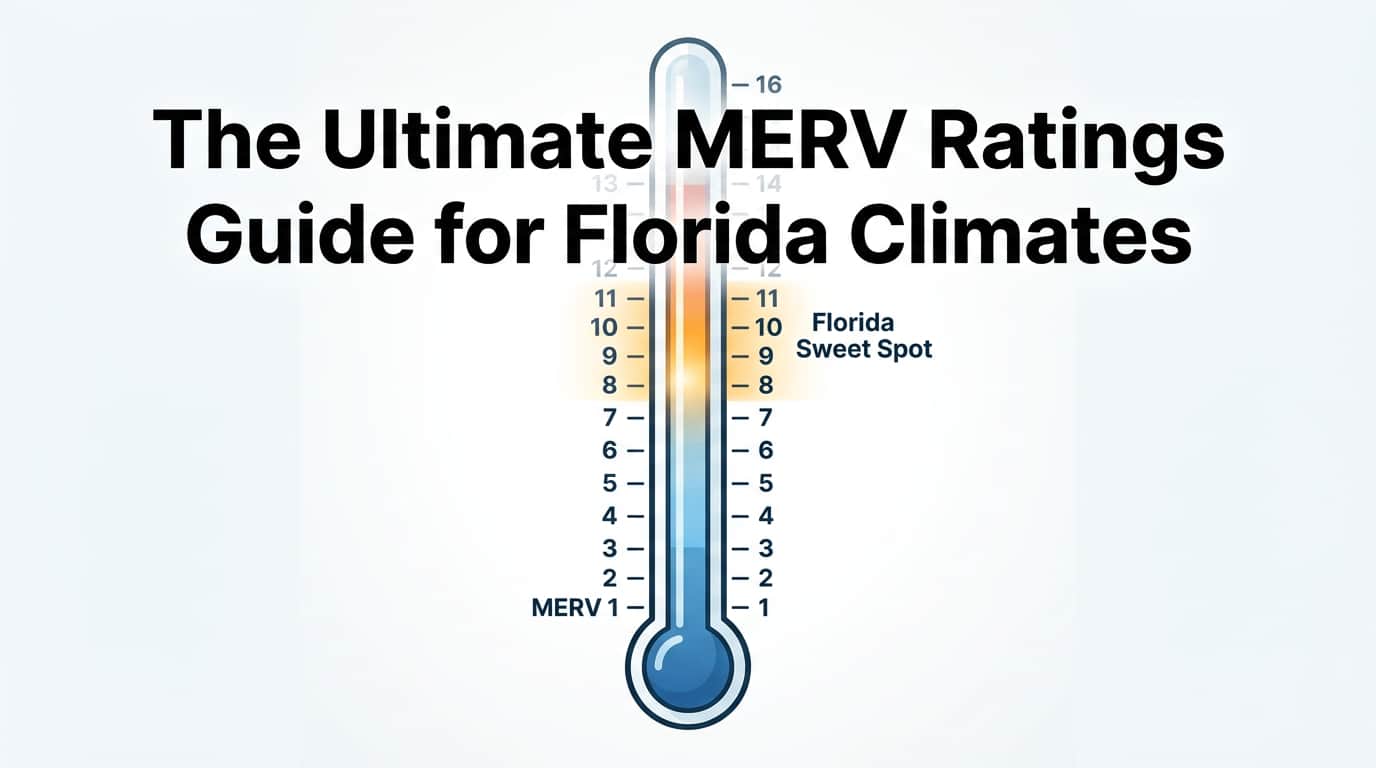
MERV stands for Minimum Efficiency Reporting Value. It's a standardized scale from 1 to 16 that measures how effectively a filter captures airborne particles. The higher the number, the smaller the particles a filter can trap. A MERV 1 filter catches large debris like insects and carpet fibers. A MERV 13 filter captures bacteria, tobacco smoke, and particles as small as 0.3 microns.
Here's the simple breakdown most property managers use:
- MERV 1-4: Basic fiberglass filters. Cheap, but they barely protect air quality. Mostly just guard the equipment itself.
- MERV 5-8: Standard residential and light commercial grade. Catches dust, pollen, and mold spores larger than 3 microns.
- MERV 9-12: Mid-range commercial filters. Effective against finer dust, lead dust, and auto emissions.
- MERV 13-16: High-efficiency filters used in hospitals and clean rooms. Traps bacteria and most airborne viruses.
Most standard HVAC advice suggests a MERV 8-11 range for commercial buildings. But that advice was written for Ohio, not Orlando.
Why Florida's Climate Changes the Filter Equation
Central Florida's climate creates unique conditions that generic MERV recommendations don't account for. Orlando averages 90°F or higher for six months of the year, and humidity consistently sits between 70% and 80% from April through October. Your AC system runs nearly 24/7 during peak season, which means your filters load up two to three times faster than they would in a northern climate.
There's another factor most property managers don't think about: mold. Mold spores thrive in Florida's humid air, and they're typically 2-10 microns in size. A MERV 6 filter lets many of those spores pass straight through. Over time, mold growth inside ductwork can trigger air quality complaints from tenants and lead to costly remediation bills ranging from $500 to over $10,000 depending on the extent of the contamination.
Properties near the coast face an additional challenge. Salt spray from sea breezes accelerates corrosion on coils and air handlers. Filters with a MERV rating of 9 or higher can help reduce the salt-laden particulate load reaching your equipment, extending the life of your system by years.
What's the Right MERV Rating for a Florida Commercial Building?
For most commercial properties in Central Florida, MERV 10 to MERV 13 is the practical sweet spot. This range effectively captures mold spores, pollen, fine dust, and most bacteria without over-restricting airflow to your system.
MERV 13 is worth the small additional cost per filter, especially for office buildings, retail spaces, and multi-tenant properties where air quality complaints can directly affect lease renewals. These filters typically run $15 to $35 each at a good HVAC supplies Central Florida supplier, compared to $3 to $6 for a basic MERV 6 filter. The price difference pays for itself when you consider the alternative.
There's one critical warning, though. Don't assume a higher MERV rating is always better. A MERV 14 or higher filter creates significant airflow resistance. If your air handler isn't sized to handle that restriction, you'll see a drop in system efficiency, frozen coils, and compressor strain. We've seen this happen repeatedly with older systems in Winter Park office buildings where a well-meaning property manager upgraded to a hospital-grade filter without checking the system specs first.
Check your equipment manual or consult a supplier before going above MERV 13. Your system's specifications will show its maximum static pressure, which tells you how much resistance it can handle.
How Do MERV Ratings Affect Indoor Air Quality in Florida?
The right MERV rating directly controls three of the biggest indoor air quality threats in Central Florida commercial properties: mold spores, pollen, and fine dust.
Mold spores are the primary concern. Orlando's humidity creates ideal breeding conditions, and mold spores range from 2 to 100 microns. A MERV 8 filter captures spores above 3 microns reasonably well. But a MERV 11 or higher filter catches nearly all spore sizes, which matters greatly in properties with reported water intrusion history or high occupancy density.
Pollen hits hard from February through May in Central Florida, with oak and grass pollen counts regularly reaching "very high" levels. Pollen particles are generally 10 to 100 microns, so a MERV 8 filter handles most of the load. Still, a MERV 10 or 11 provides noticeably better results for tenants with allergies.
Fine dust and particulates accumulate faster in Florida than most people realize. Construction dust from the constant development happening across Lake Nona and the greater Orlando metro area gets pulled into your HVAC system daily. A MERV 9 or higher filter makes a measurable difference in how quickly your coils and air handlers accumulate buildup, which translates directly into fewer service calls. Our team at Discount Air Supply LLC carries a full range of central air conditioning systems and home package air conditioning units suited to Florida's demanding climate.
How Often Should You Replace Filters in Florida's Peak AC Season?
In Central Florida, commercial HVAC filters need replacement every 30 to 60 days from April through October. This isn't a conservative estimate. It's what the climate demands.
During summer, your system pulls in humid, particle-heavy air around the clock. A filter that might last 90 days in a cooler, drier climate gets saturated in half that time. A clogged filter raises system static pressure, reduces airflow by up to 40%, and causes your equipment to work significantly harder to maintain setpoint temperatures.
From November through March, most commercial buildings in Central Florida can extend filter replacement to every 60 to 90 days. The system still runs, but the lower humidity and slightly reduced runtime give filters more breathing room.
Properties with higher occupancy, food service operations, or locations near construction sites should stay on the shorter end of these schedules regardless of season. When in doubt, check the filter. If you hold it up to light and can't see through it, it needed to go in last week.
For buildings using HVAC supplies Central Florida contractors recommend, the best practice is to schedule filter replacements at the start of April (before the heat peaks), mid-June, late August, and again in November. That four-times-a-year schedule keeps systems running efficiently and satisfies most commercial maintenance agreements.
The Bottom Line on MERV Ratings for Your Florida Properties
Choose MERV 10 to MERV 13 for Central Florida commercial buildings. Don't go below MERV 8, and don't go above MERV 13 without confirming your system can handle the added restriction. Change filters every 30 to 60 days during summer. Track your filter replacement dates and energy costs side by side, and you'll quickly see the return on investing in quality filtration.
Getting the right HVAC supplies Central Florida properties need doesn't have to be complicated. Discount Air Supply LLC stocks the filters, parts, and equipment your commercial buildings require, with knowledgeable staff who understand what Florida's climate actually does to HVAC systems. Give us a call at (407) 951-5050, and we'll help you find the right MERV rating and replacement schedule for your specific properties.