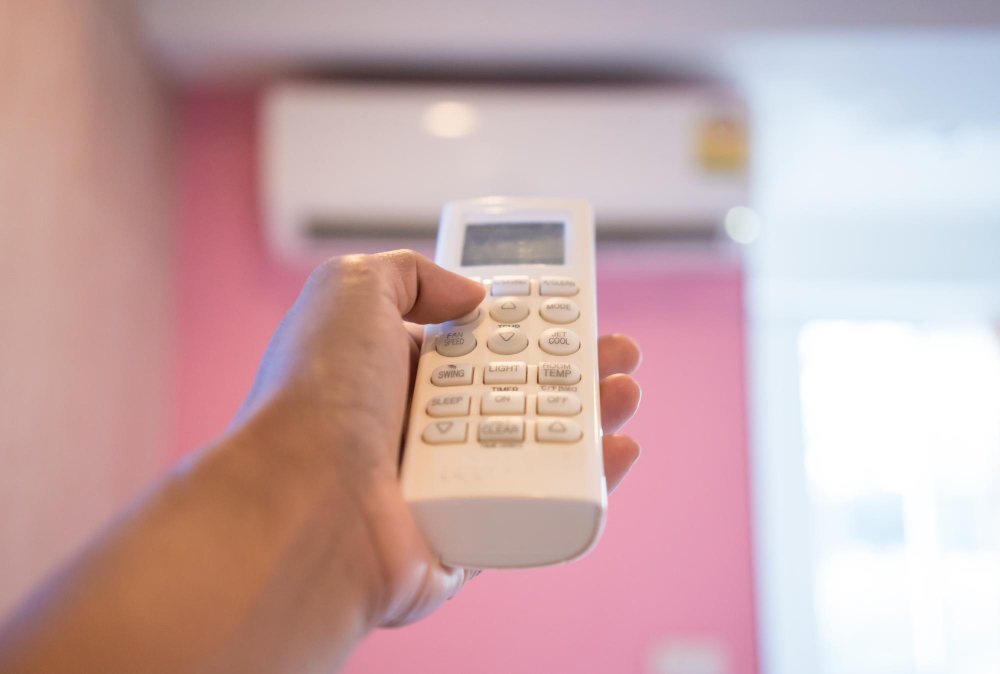
In many commercial properties, the answer is yes. In Orlando’s hot and humid climate, keeping the air conditioner running at a steady, moderate temperature can cost less than turning it off completely and forcing the system to cool a heat-soaked building later.
When an AC is shut down for hours, heat and moisture build up quickly. Bringing temperatures back down often requires longer run times and higher energy use, especially during Central Florida summers. For property owners, this isn’t just about comfort—it’s about managing one of the largest operating expenses. Understanding when leaving the AC on makes sense can help reduce energy spikes, protect equipment, and control monthly utility costs.
How Does Your Air Conditioner Actually Work?
To understand the best way to manage your thermostat, you first need to understand what your AC is actually doing. Many people think an AC unit pumps cold air into a room, like filling a cup with ice water. In reality, your air conditioner is a heat removal machine. It pulls the hot air out of your building, runs it over cold coils to remove the heat and humidity, and then cycles the conditioned air back into the room.
This process takes a lot of energy, especially for central air conditioning systems that handle large volumes of air. When you turn your unit on, the compressor kicks into high gear to lower the temperature. Once the thermostat reaches the set number, the compressor turns off, and the fan might keep running to circulate the air. The energy spike happens when that compressor has to start up and run hard.
Should You Keep the AC Running Continuously?
There is a strong argument for keeping your system running at a set temperature, especially in our humid climate. When you turn your AC completely off, the temperature inside your building rises, but so does the humidity. In Florida, humidity is often a bigger enemy than the heat itself.
If you shut the system down at 5:00 PM and don't turn it back on until 8:00 AM the next day, your building soaks up heat and moisture all night. When you finally flip the switch, your system has to work overtime to remove all that accumulated humidity before it can even start lowering the temperature.
This "catch-up" game puts massive stress on your equipment. It is like asking a runner to sprint at full speed after sitting on the couch for hours. For commercial properties with inventory, computers, or drywall, allowing humidity to build up can also lead to mold growth and damage to the building's interior. You might save a few pennies on electricity overnight, but you could be paying for it with premature equipment failure or mold remediation later.
Does Turning the AC Off Save Money?
On the other side of the coin, basic physics suggests that the less your AC runs, the less electricity it uses. If your compressor isn't running, it isn't drawing power. For a building that will be empty for a long period—say, a warehouse that closes for the weekend or a school on summer break—turning the system off (or setting it very high) makes sense.
However, for a daily office schedule, turning the unit off completely is rarely the most efficient choice in Florida. The energy required to remove the heat load that builds up during the day often cancels the savings you gained while the unit was off. Plus, your tenants or employees will walk into a hot, sticky building, and it might take two or three hours to get comfortable again.
What Factors Determine Your Energy Costs?
The "leave it on vs. turn it off" debate doesn't have a one-size-fits-all answer because every building is different. Here are the main factors that change the equation.
How Well Is Your Building Insulated?
If your commercial property has excellent insulation and double-paned windows, it traps cool air effectively. You can afford to set the temperature higher when you leave because the building won't heat up as quickly. If you're in an older building near the historic district in Sanford with drafty windows, your cool air will escape the moment the AC shuts off.
What Type of Unit Do You Have?
Modern systems are designed with variable-speed motors that are much more efficient at maintaining a steady temperature than older single-stage units. However, even smaller commercial spaces that utilize home package air conditioning units need to be managed carefully. An older unit that is nearing the end of its 10-15 year lifespan will struggle significantly more to recover from a high heat load than a brand-new high-efficiency model.
Where Is Your Building Located?
We aren't just talking about the city. Does your building have a lot of west-facing glass that catches the afternoon sun? Is it shaded by large oak trees? These environmental factors dictate how fast your building heats up. If you need AC supplies Central Florida businesses rely on to improve efficiency, such as better filters or programmable thermostats, looking at your specific sun exposure is a good place to start.
How Can You Lower Cooling Costs Without Sacrificing Comfort?
The most effective strategy for most Florida commercial owners is not "on vs. off," but rather "setback." This means leaving the AC on but adjusting the temperature when the building is unoccupied.
Use a Programmable Thermostat
This is the golden rule of AC efficiency. According to the Department of Energy, you can save as much as 10% a year on heating and cooling by simply turning your thermostat back 7°-10°F for 8 hours a day from its normal setting.
For a Florida business, this might mean keeping the office at 74°F during work hours and programming it to go up to 80°F at night. This keeps the humidity in check and prevents the building from baking, but gives your AC unit a break.
Keep Up with Maintenance
A neglected system works harder to produce the same amount of cooling. A dirty filter blocks airflow, forcing the fan to run longer. Low refrigerant levels make the compressor work overtime. Regular maintenance is an investment, not an expense.
Why Is the Florida Climate So Tough on AC Units?
It is no secret that our climate is brutal on machinery. In Orlando, AC units work 2-3 times harder than units in northern states. The combination of intense heat and salty air (if you're closer to the coast) wears down components faster.
While a unit in a cooler climate might last 20 years, the average lifespan of an AC unit in Florida is closer to 10-15 years. This reduced lifespan is precisely why managing your usage is so critical. Pushing your system to the limit by forcing it to recover from 90-degree indoor temperatures every morning will only push that lifespan down further.
If you're looking for AC supplies Central Florida property owners use to extend the life of their systems, consider investing in surge protection as well. With Florida being the lightning capital of the US, a single storm can fry a compressor instantly.
The Verdict
So, is it cheaper to leave the AC on all day? In Central Florida commercial properties, the answer is generally yes—but with a setback temperature.
Turning the system completely off invites humidity damage and puts excessive strain on your equipment during the recovery period. Leaving it at 72°F all night when no one is there is a waste of money. The sweet spot is utilizing a programmable thermostat to raise the temperature by about 5-8 degrees when the building is empty. This protects your asset, saves energy, and ensures your staff doesn't walk into a sauna the next morning.
If your current system is struggling to keep up, or if you need AC supplies Central Florida businesses trust to keep their operations running, we are here to help. We can help you find the right parts to optimize your system for our unique climate.
Contact Us
Do you need help finding the proper parts to improve your commercial property's efficiency? Discount Air Supply LLC is your local partner in keeping Orlando cool. Give us a call at (407) 951-5050 to speak with our team.