If you manage commercial properties in Orlando, a clogged condensate line is one of the fastest ways to turn a routine maintenance call into a water damage claim. Florida's humidity sits between 70-80% for much of the year, and that moisture creates the perfect environment for algae and mold to take hold inside your drain lines. Left unchecked for even 30 days, a blocked line can back up, overflow a drain pan, and cause ceiling or flooring damage that costs thousands to repair.
Need condensate line supplies or AC parts right now? Call Discount Air Supply LLC at (407) 951-5050, and we'll get you sorted.
Across Central Florida, property managers handling multi-unit buildings, office parks, and retail spaces tell us the same thing: they didn't know condensate line maintenance was even on their checklist until something went wrong. This guide covers exactly what you need, why Orlando's climate makes this task non-negotiable, and the specific supplies required to do it safely yourself.
Why Does Orlando's Humidity Make Condensate Lines Clog So Fast?
Orlando's high humidity causes algae to grow inside condensate drain lines significantly faster than in drier climates, often creating a full blockage in as little as 30 to 60 days during peak summer months. When warm, humid air passes over your AC's evaporator coil, moisture condenses and drips into the drain pan. That water is warm, slightly acidic, and full of airborne organic particles. In a Central Florida summer, those conditions produce algae growth at a rate two to three times faster than you'd see in northern states.
For property managers in areas like Lake Nona, where large commercial developments run high-capacity HVAC systems year-round, this isn't a minor inconvenience. A single clogged line in a multi-story building can trigger a float switch, shut down an entire AC unit, and leave tenants without cooling on a 92-degree afternoon.
This is why proactive condensate line maintenance isn't optional in Florida. It's a core part of your HVAC upkeep schedule.
What Supplies Do You Need to Clear a Condensate Line Safely?
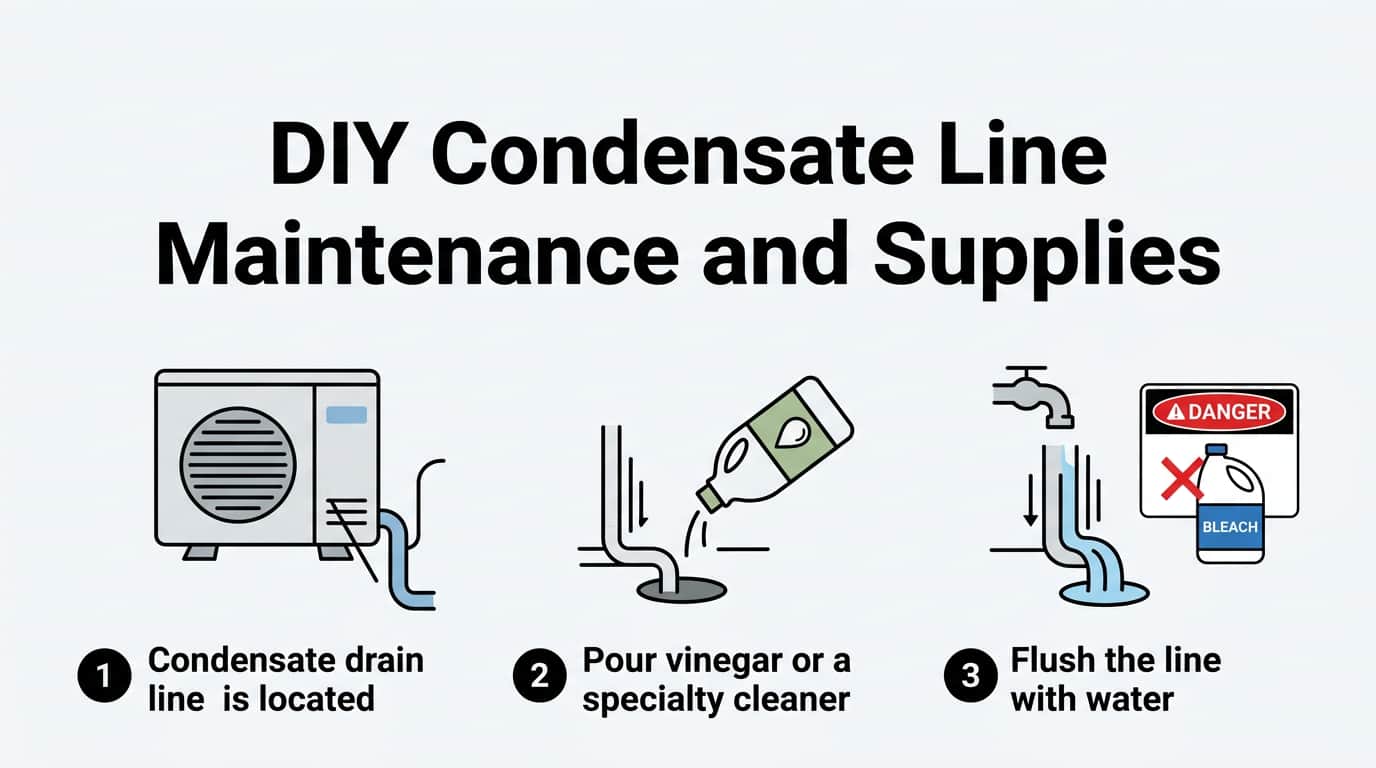
To clear a condensate line yourself, you need four basic items: distilled white vinegar or a commercial algaecide tablet, a wet/dry vacuum, a funnel, and protective gloves. Each plays a specific role in safely flushing and clearing the line without damaging the PVC piping or float switch components.
Here's a breakdown of what to have on hand before you start:
Algaecide tablets or distilled white vinegar: Vinegar is the go-to DIY solution. Pour about 1/4 cup into the drain access port every 30 days. Algaecide tablets, available as AC supplies through Discount Air Supply LLC, are a stronger option for commercial units that run continuously. They dissolve slowly and keep the line treated for 30 to 90 days depending on the product.
Wet/dry vacuum: This is your clearing tool. Attach it to the exterior end of the condensate drain line and run it for two to three minutes. A strong vacuum pulls out algae buildup, standing water, and debris without the need for chemical drain openers, which can damage PVC joints over time.
Condensate line access port cap and PVC fittings: If your drain lines are older or show wear at the joints, keep spare PVC pipe and caps on hand. Access ports sometimes crack or leak after repeated maintenance. Standard 3/4-inch PVC fittings handle most residential and light commercial lines, while larger commercial units often use 1-inch lines.
Safety pan and float switch: These aren't cleaning supplies, but they're the safety net that prevents water damage when a clog does occur. An SS3 safety pan and an All-Access Float Switch are two products carried by Discount Air Supply LLC as part of their AC supplies Orlando property managers rely on most. A properly installed float switch shuts off the unit before overflow happens, giving you time to clear the line without a mess.
How Often Should You Flush Condensate Lines on a Commercial Property?
Flush condensate drain lines every 30 days during April through October, and every 60 to 90 days during the cooler season. Commercial properties with high foot traffic, multiple HVAC zones, or buildings near wooded areas like those in the Dr. Phillips corridor should stick to monthly flushing year-round. Higher occupancy means more dust and organic particles circulating through the air, which speeds up algae accumulation.
A simple monthly schedule looks like this:
- Month 1: Flush with vinegar and inspect the drain pan for standing water
- Month 2: Drop in an algaecide tablet after flushing
- Month 3: Wet/dry vacuum the exterior drain opening and check the float switch
Rotating these tasks takes less than 15 minutes per unit once you've got the right supplies stocked.
What Does a Blocked Condensate Line Actually Cost a Property Manager?
A condensate line flush costs almost nothing if done regularly, but ignoring it can lead to repair bills ranging from $500 to $3,000 or more depending on the extent of water damage. A basic service call from an HVAC tech to clear a line typically runs $75 to $150 in the Orlando area. That's manageable. The problem is when a blocked line goes unnoticed.
Standing water in a drain pan for 48 to 72 hours can soak through the Search Intent: Operational efficiency.
Content Angle: Focus on the guard's experience. Slow software = long lines = angry residents. Fast software = smooth entry.ceiling drywall, damage insulation, and create secondary mold growth behind walls. Drywall replacement alone in a commercial space often starts at $400 and climbs fast. If the moisture reaches flooring or electrical components, you're looking at a much bigger number.
Proactive maintenance with the right AC supplies Orlando businesses can source locally costs well under $20 per unit per year. That's a straightforward return.
Step-by-Step: How to Flush a Condensate Line
This process works for most central air conditioning systems and home package air conditioning units commonly found in commercial properties across Central Florida.
- Turn off the AC unit at the thermostat and breaker before touching any drain components.
- Locate the drain access port, usually a white PVC cap on the drain line near the air handler. Remove it carefully.
- Inspect the drain pan beneath the air handler for standing water. If it's full, your line is already blocked. Use the wet/dry vac on the exterior drain opening first.
- Pour 1/4 cup of distilled white vinegar into the access port using a funnel. Wait 30 minutes. This loosens algae buildup along the line walls.
- Flush with warm water, about 2 cups, to push the loosened debris toward the exterior drain.
- Vacuum the exterior drain with your wet/dry vac for two to three minutes to pull out any remaining buildup.
- Replace the access port cap, restore power, and confirm the unit drains properly over the next hour.
- Log the date. Set a reminder 30 days out for the next flush.
If the line doesn't clear after two attempts, or if you notice corrosion or cracked PVC near the air handler, that's the point to call a licensed HVAC tech.
Get the Right Supplies Before the Problem Starts
Managing properties in Orlando means staying ahead of the humidity. A condensate line that's maintained monthly costs almost nothing. One that's ignored for a season can shut down a unit and damage a building.
For the supplies you need, including algaecide tablets, float switches, drain pans, PVC fittings, and more, Discount Air Supply LLC serves commercial property managers throughout Central Florida from their Casselberry location at 316 Oleander Way. Call them at (407) 951-5050 to ask about availability or place an order. Getting the right parts locally means less downtime and fewer surprises when the summer heat peaks.